Updated
Talents: what got rebuilt, and the quality-of-life that came with it
- 432
- talent points
- 27
- trees
- 1 hr
- blessing duration
- 5 lv earlier
- Legacy: talent unlock
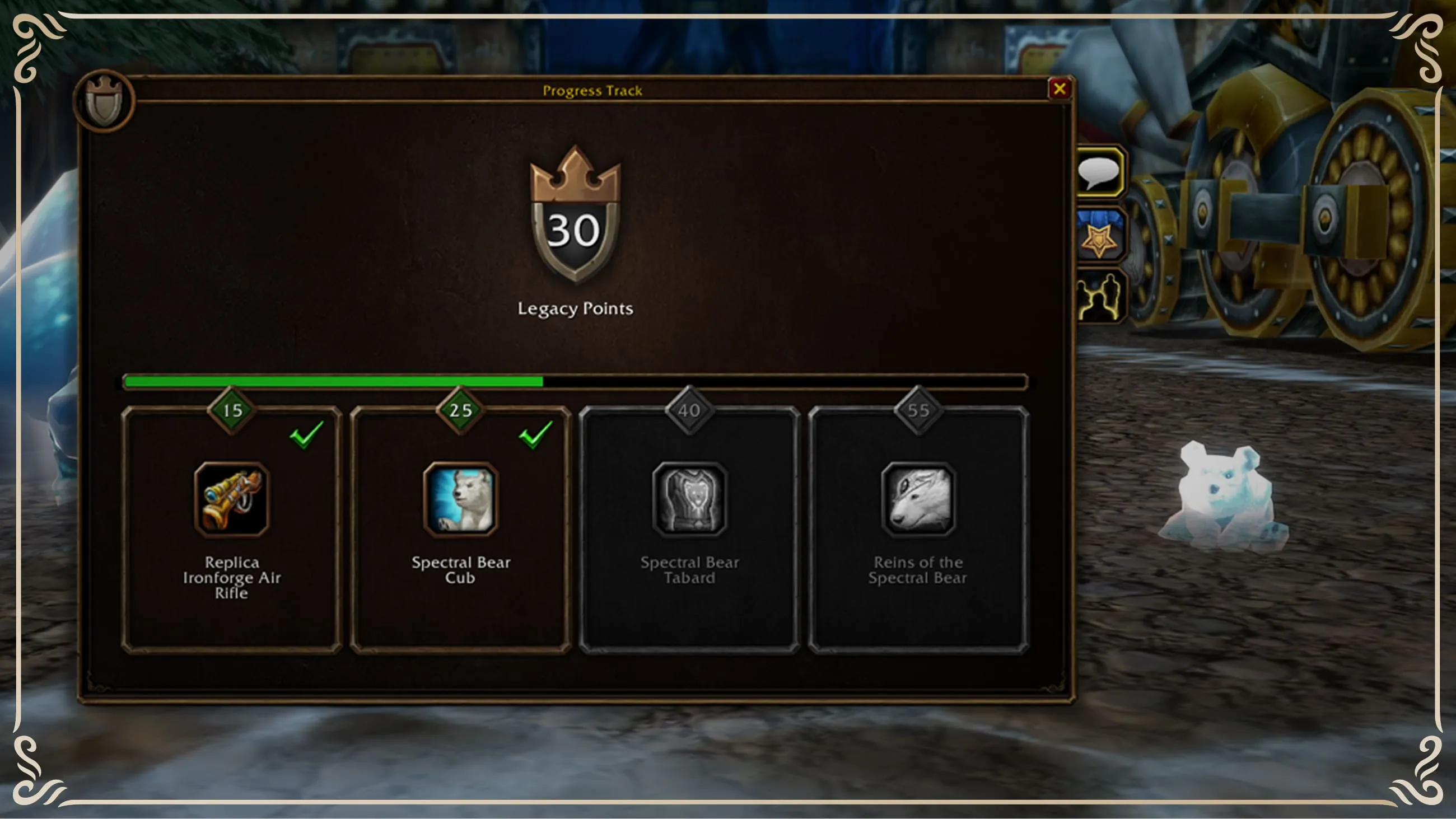
Forever’s talent changes follow two patterns: abilities that were talent tax become baseline, and trees get new capstones that create two-way interactions rather than flat damage increases.
The client holds 432 talent points across 27 trees — nine classes, three each. That’s the data behind the class pages here.
The buff tax is gone
The clearest change is Paladin, and it’s the one Classic players will notice immediately:
- Blessing of Kings and Consecration are baseline. No points required.
- Blessings last one hour instead of five or fifteen minutes.
That second line removes one of the most tedious rituals in Classic — rebuffing a raid every fifteen minutes. If the same treatment is applied elsewhere, it’s the largest quality-of-life change in the expansion and it costs nothing in power.
The broader pattern shows up in Legacy’s Reagent Economy perk too: class abilities stop requiring purchasable reagents, and tier 1 camping features cost no materials. Rogue Vanish powder is the example creators keep citing.
Trees with real rebuilding
Rogue — Subtlety
The most extensively reworked tree in the beta:
- Removed: Improved Sap, Sleight of Hand, Deadliness
- Added: five new talents in their place
- Dirty Tricks — cuts the energy cost of Sap and Blind by 25%
- Improved Distract — larger radius, and distracted enemies have stealth detection as if one level lower
- Improved Backstab replaced by Puncturing Wounds
- Precision and Deflection cost fewer points to max
- Rupture ticks reduce the energy cost of your next Hemorrhage or Backstab, stacking up to five times
- Hemorrhage increases Rupture damage, turning bleed maintenance into a loop rather than a chore
Assassination leans much harder into poison damage and gains Mutilate. And at the class level, Rogues can wield axes now — which puts them in direct competition with Fury Warriors for drops.
Warrior — Arms
Arms loses the old weapon-specialisation system, replaced with something that gives more freedom in weapon choice — creators compare it to the Rogue tree’s new Hack and Slash talent.
Bloodthrill creates a Rend → Overpower interaction with an extra proc to play around, which turns two buttons that didn’t talk to each other into a pair.
Protection swapped Bastion and Focused Rage, putting Focused Rage earlier so the spec smooths out instead of spiking.
Hunter — Survival
Two new capstones that reference each other:
- Improved Prey (21-point capstone) — melee hits have a 10% chance to proc a free Mongoose Bite
- Lacerating Strikes — Mongoose Bite applies a bleed
Combined with Summon Hawks as a new shot, Survival now has a melee loop with its own feedback cycle rather than being the spec nobody picks.
Mage — Arcane
Arcane Blast drives a stacking decision:
| Effect | Value |
|---|---|
| Damage bonus to your other spells, per stack | +10% |
| Mana cost increase to Arcane Blast, per stack | +175% |
| Maximum stacks | 4 |
| Duration | 8 seconds |
The choice is how many stacks you can afford before you spend them. Four stacks is a huge Arcane Missiles; three might be correct when your mana is tight.
Frostfire Bolt also becomes baseline for every Mage, opening cross-tree fire/frost builds.
Druid — Feral
Dodge and Swipe tuning, most notably Swipe costing 2 less rage and dealing 40% more damage. The Feral kit has a documented design problem that the community argues isn’t only about numbers, and there’s a long beta thread making that case.
The Legacy shortcut
The Talented perk in Legacy’s Adventure tree lets characters unlock talent points up to five levels earlier than normal. A level 40 talent becomes available at 35.
For anyone levelling an alt, that’s the perk that changes the shape of the whole 1–60 run rather than adding a stat.
How to use this
Talent layouts move between builds. Forever’s beta was taking a new build roughly every day during this period. A tree map that was accurate last week may not be this week.
That’s why the class pages regenerate from the client rather than from a written guide — they show the current build’s trees, tier by tier, with the actual talent names.
What’s still missing
- Point costs per talent. The client gives us talent positions, tiers and linked spells, but the cost structure isn’t in the data yet, so no build planner has been built on top of it.
- Spec-specific pruning. 432 points across 27 trees includes entries that don’t matter for a given spec. Separating those is ongoing.
- A talent calculator is the obvious next tool here, but building one that’s actually better than the ten that already exist needs the cost data first.